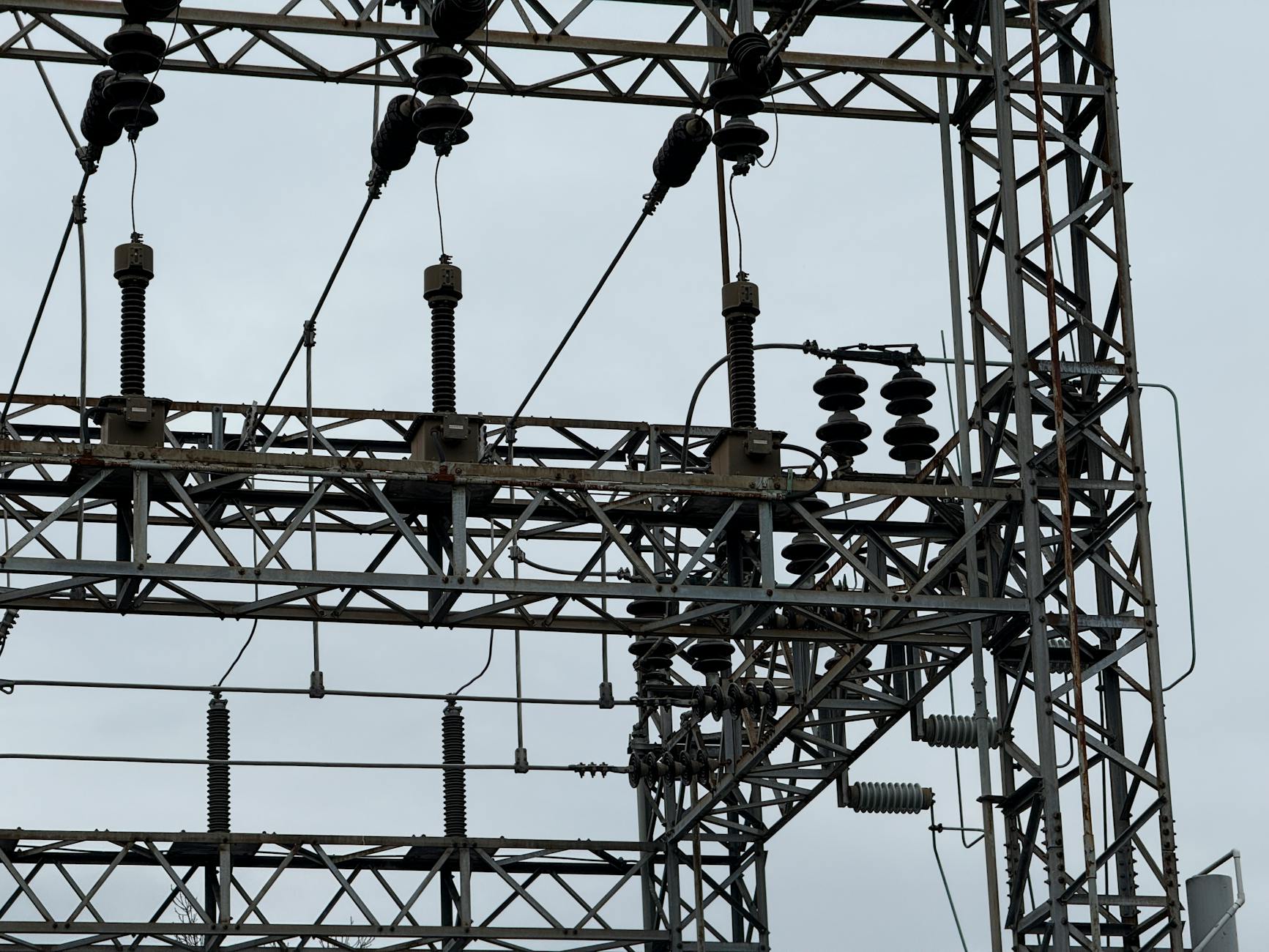
City Power is Johannesburg's municipal electricity distributor, supplying power to commercial properties, industrial facilities, and businesses across the city. With hundreds of thousands of accounts on its billing system, it processes an enormous volume of invoices every month — and a meaningful percentage of those invoices contain errors.
If your business operates in Johannesburg and receives electricity from City Power, here's what to look for on your account and how to dispute it when something doesn't add up.
The Most Common City Power Billing Errors
1. Estimated Readings That Never Get Corrected
City Power relies on meter readers to capture actual consumption data. When access is denied, the meter is faulty, or the reader simply doesn't get to your property, the system generates an estimated reading. This estimate is usually based on your historical average consumption.
The problem: if your consumption has changed — you've added equipment, reduced production, improved efficiency, or even vacated part of a property — the estimate won't reflect reality. And when actual readings are eventually taken, the adjustment (called a "wash-up") can result in either a massive catch-up bill or a credit that takes months to process.
Look at your bill for the letters "E" or "EST" next to meter readings. If you see estimated readings for more than two consecutive months, raise a query immediately.
2. Tariff Misapplication
City Power applies different tariff structures based on your supply size, property type, and consumption profile. These include standard tariffs with flat energy and demand rates, and time-of-use (TOU) tariffs with rates that vary by time of day and season.
Tariff misapplication happens when your account is coded to the wrong tariff category. This can occur during a tariff migration (when City Power restructures its tariff schedule), when your supply is upgraded or downgraded, or simply through a data capture error. The result is that every line item on your bill is calculated at the wrong rate — and because the rates are close enough to seem plausible, the error goes unnoticed.
3. Demand Charge Errors
For commercial accounts, demand charges (kVA) are a significant portion of the total bill. City Power calculates demand based on your maximum demand reading for the billing period, multiplied by the applicable tariff rate.
Errors occur when the CT (current transformer) ratio is captured incorrectly in the billing system, when demand readings are estimated rather than actual, or when the wrong demand tariff rate is applied. A CT ratio error is particularly costly because it multiplies every reading — actual or estimated — by the wrong factor.
4. Network Access and Service Charges
These fixed charges are based on your supply size (measured in amps or kVA) and are supposed to reflect the cost of maintaining the network infrastructure that delivers electricity to your property. Errors occur when your account reflects the wrong supply size — for example, if you downgraded your supply but the billing system still reflects the old, larger connection.
5. Backdated Adjustments Without Explanation
City Power periodically applies backdated adjustments to accounts — corrections for previous billing periods. These appear as line items with historical dates and can be positive (you owe more) or negative (credit). The problem is that these adjustments are often poorly explained, making it impossible to verify whether they're correct without reconstructing the historical billing.
How to Dispute a City Power Bill
Step 1: Gather your documentation. You'll need at least 12 months of electricity bills, your supply agreement, and photographs of your meter showing the current reading. If you have your own sub-metering or energy monitoring, include that data too.
Step 2: Identify the specific error. Don't submit a vague "my bill is too high" query. Pinpoint the exact line item: the tariff rate, the demand reading, the estimated consumption. Calculate what the correct charge should be based on the published tariff schedule.
Step 3: Submit a formal query. City Power accepts queries through their customer service centres, online portal, and registered mail. Include your account number, meter number, the specific billing period in question, and your calculation showing the discrepancy. Keep copies of everything.
Step 4: Follow up. City Power's turnaround time on billing queries varies significantly. Simple queries (estimated readings) may be resolved in weeks. Complex queries (tariff disputes, CT ratio corrections) can take months. Escalate through the proper channels if you don't receive a response within the stipulated timeframe.
Step 5: Escalate if necessary. If City Power doesn't resolve your dispute satisfactorily, you can escalate to the National Energy Regulator of South Africa (NERSA) for electricity-related complaints.
Prevention Is Better Than Disputes
Disputing a billing error after the fact is time-consuming and often frustrating. The more effective approach is to verify every bill as it arrives — checking readings against your own meter, confirming tariff rates against the published schedule, and flagging anomalies immediately.
Most businesses don't have the in-house expertise or time to do this. That's why automated verification exists.
Want to know if your City Power account has errors? The OptiRate Electricity Rate Calculator benchmarks your current electricity rate against what's available for your consumption profile. It takes 60 seconds, it's free, and it's the fastest way to find out if you're overpaying.
Gallery